**UPDATE: On May 20, 2026, the federal government launched a review of California's Coastal Zone Management program, which undermines the Coastal Act. Read below about why the Coastal Act is important for San Franciscan's and don't forget to sign our action alert to tell the Trump Administration to take its hands off the California coast!
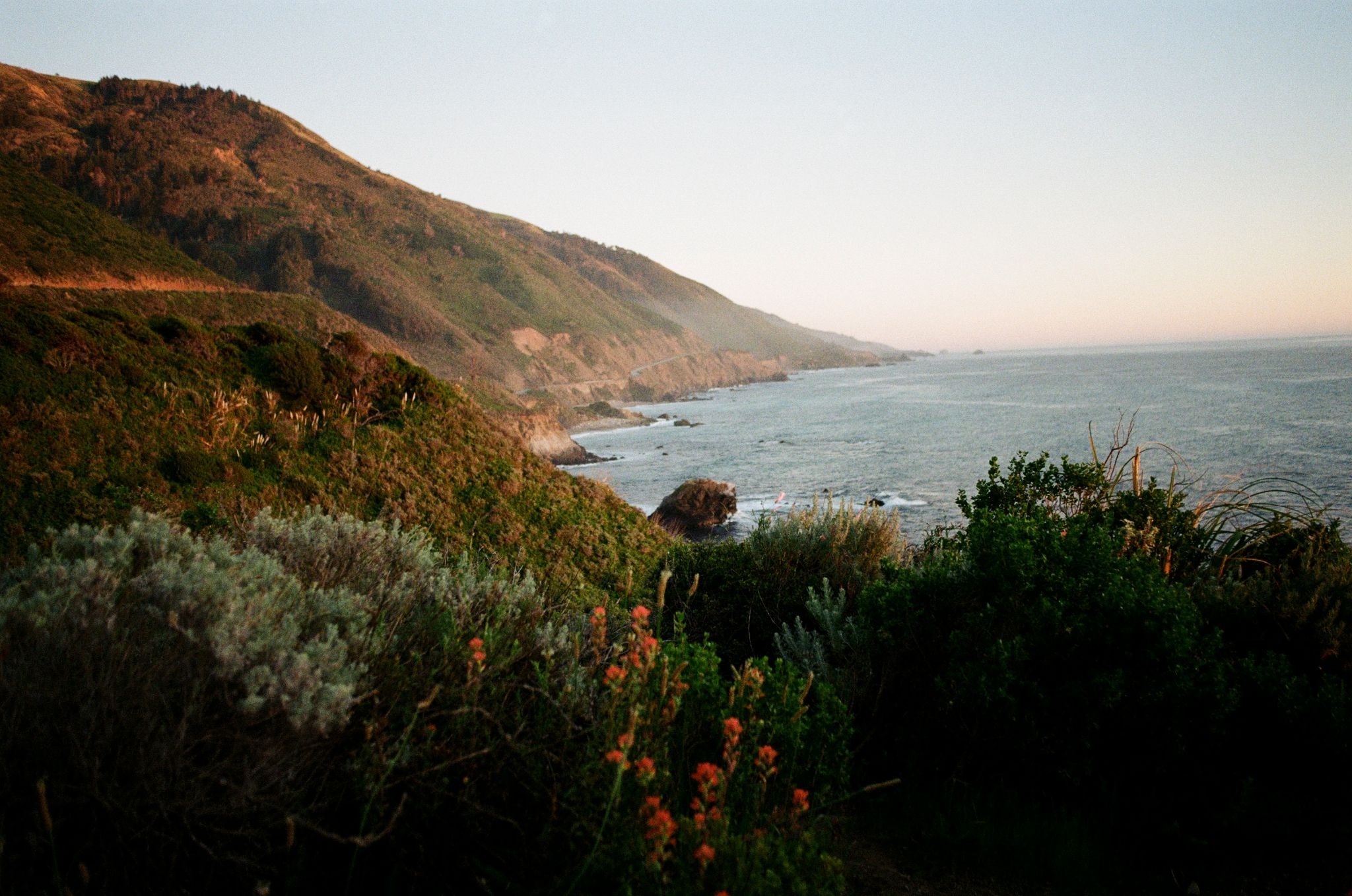 Big Sur is a developers dream…so why is there still so much public land here? Photo: Laura Walsh
It’s no accident that the California coast – one of the most lucrative strips of real estate in the entire country – still has vast stretches of public beaches and special habitats. The California Coastal Act is the reason that Bill Gates sits on the same sand you and I do when he visits his beach house in Del Mar; it’s also the reason why tech billionaires like Vinod Khosla have faced actual repercussions for trying to make the public beach their personal playground.
The Coastal Act is a piece of California state law that was passed in 1976 to balance private property interests in the coastline with the protection of unique habitats and access to public beaches. The key word here is ‘balance,’ because this law presides over the immense and often conflicting interests in all that the California coast has to offer.
It’s worth our chapter celebrating this law today, on the fiftieth anniversary of its passing, because it represents a whole lot of things to those of us who love San Francisco’s coastline. For starters – the Coastal Act was made possible by a group of citizens who put Prop 20 on the ballot after the Santa Barbara oil spill showed how devastating industry could be to our coastline if it went unchecked. The spirit of activism and political prowess we have here in San Francisco was alive and well in these public advocates who biked up and down the coast advocating for what basically became the foundation of the Coastal Act.
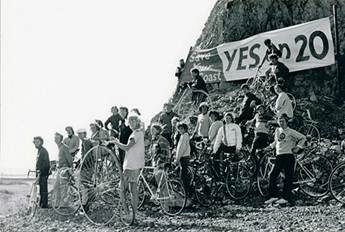 Photo: The California Coastal Commission
Also: trails! One of the fundamental principles baked into the Coastal Act is that the state should maximize public access and recreational opportunities along the coast. The law, in conjunction with funding and management from the State, has engendered more than 900 miles of Coastal trail – including the epic Lands End trail and Fort Funston blufftop trails.
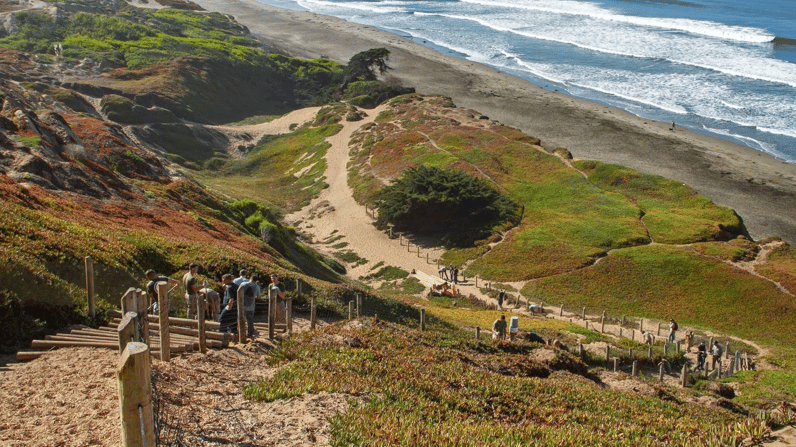 Photo: National Park Service
And finally, it’s no secret that the Coastal Act has an impact on Ocean Beach. The Coastal Act has been used to require SFPUC to keep their pending seawall buried in sand and to initiate long-term planning for relocation as sea levels rise (read more about Surfrider’s Restore Sloat Campaign here). Similarly, the Coastal Act has played a role in the permit that allowed the Great Highway to be closed to cars; and it will be leaned on to dictate what equitable management of the space looks like in years to come.
Because the Coastal Act is leaned on to help preserve coastal resources and access to them, it will continue to be at the center of more controversial decisions in the coming decades as sea level rises and forces us to choose what types of spaces and recreational opportunities to protect as the land near our coastline gets smaller. And while that reality can be a tough pill to swallow, the Coastal Act has given us an important legal framework for maintaining public beaches even in the face of dramatic climate impacts.
Like any law that exists to protect public resources, this one is constantly under political pressure. Right now, us California beachgoers probably take it for granted that all people are allowed to visit and enjoy the public beach – and that there are nice trails to walk on and whales to see breaching (sometimes, if we’re lucky.) But there are plenty of developers and politicians who look at that picture and instead see forfeited development opportunities.
By upholding the Coastal Act we can stand our ground and protect what we love – and that’s something we’re willing to make waves for.
Interested in standing up for the Coastal Act in the State Legislature this year? Check out our coastal advocacy campaigns here, and send a message to your legislators by clicking here and here.
 Laura is a public trust advocate and has spent the past ten years studying and helping cities to prepare for sea level rise. Formerly Surfrider's California Policy Manager, she's now on the San Francisco Chapter's Executive Committee and can finally say out loud that Ocean Beach is the best beach in the state. She is currently a Policy Manager at Save the Bay and hopes to connect Surfrider's local advocacy efforts with broader Bay Area community and watershed priorities.