Climate Action Program
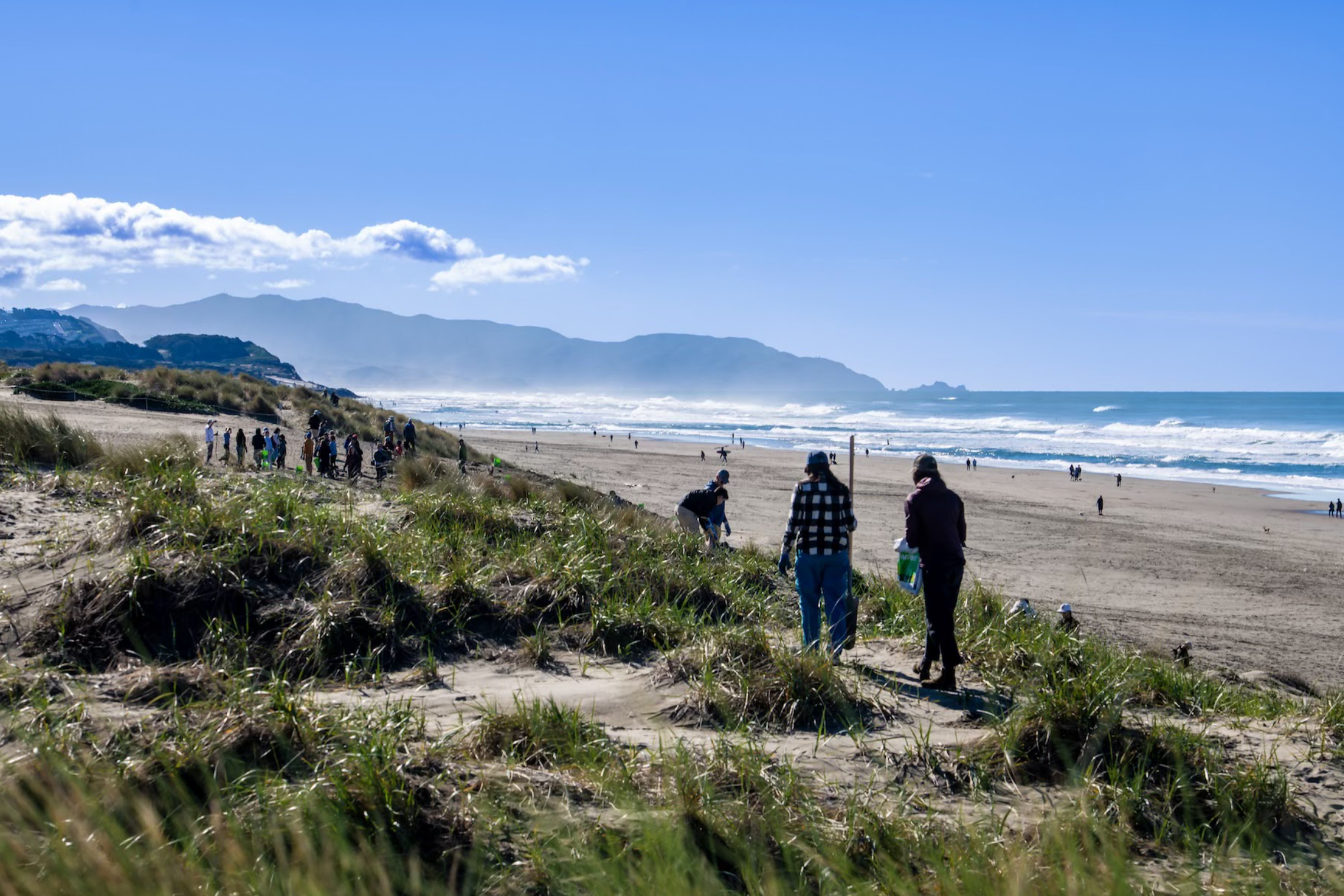
Photo Credit: Jim Watkins, San Francisco Rec & Park
Fighting Climate Change with Nature
The fight to protect our ocean is taking on a new urgency. Every day, our network is experiencing how extreme weather is changing local shorelines. Sandy beaches are being lost, infrastructure is crumbling into the ocean, and vital coastal ecosystems are threatened by stronger storms and rising seas. U.S. scientists estimate that California could lose up to 75% of our beaches by 2100 due to rising sea levels. However, nature is capable of providing a new path forward – powerful nature-based solutions to help mitigate the effects of climate change on our coasts.
Dune Restoration at Ocean Beach
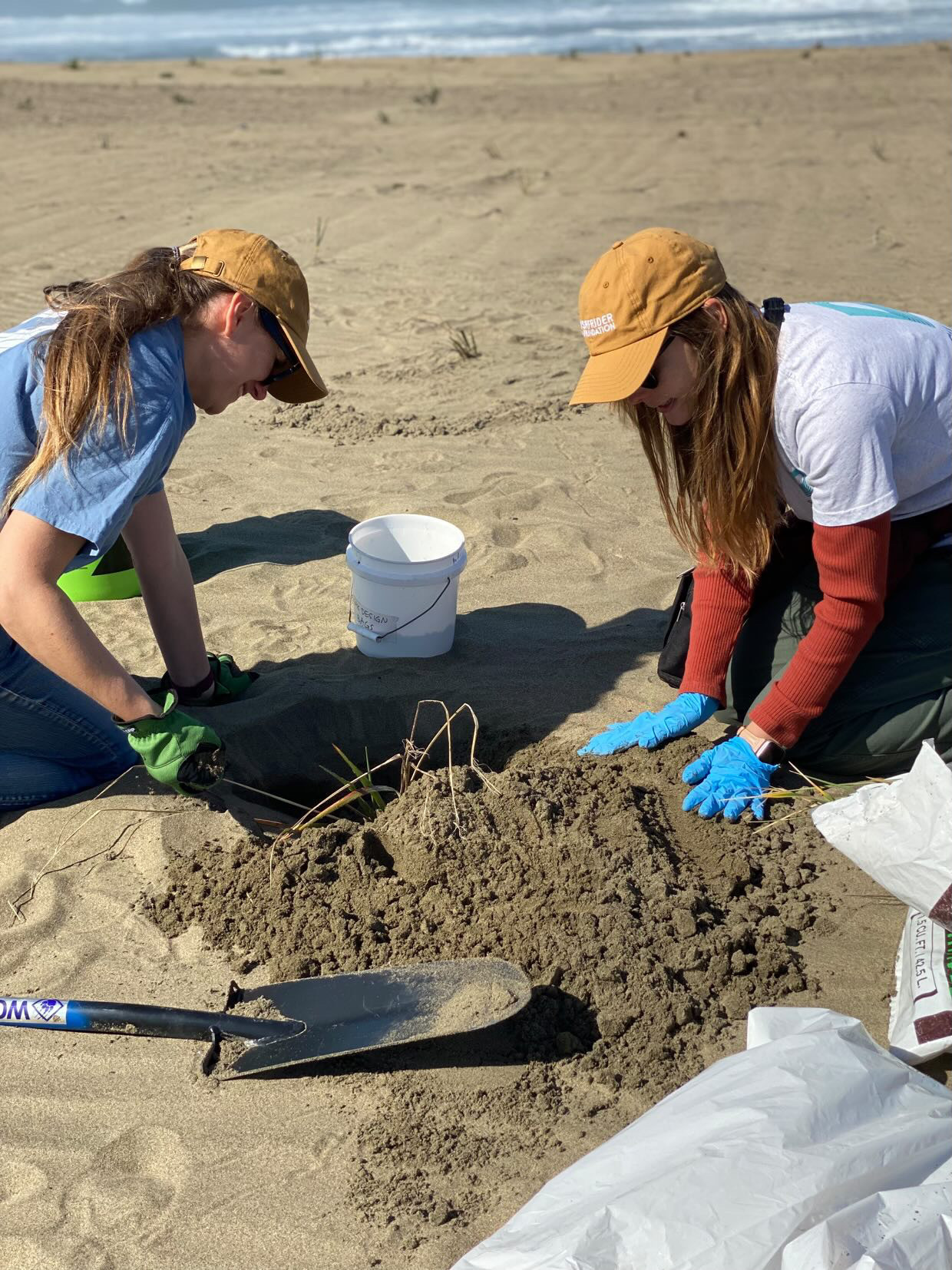
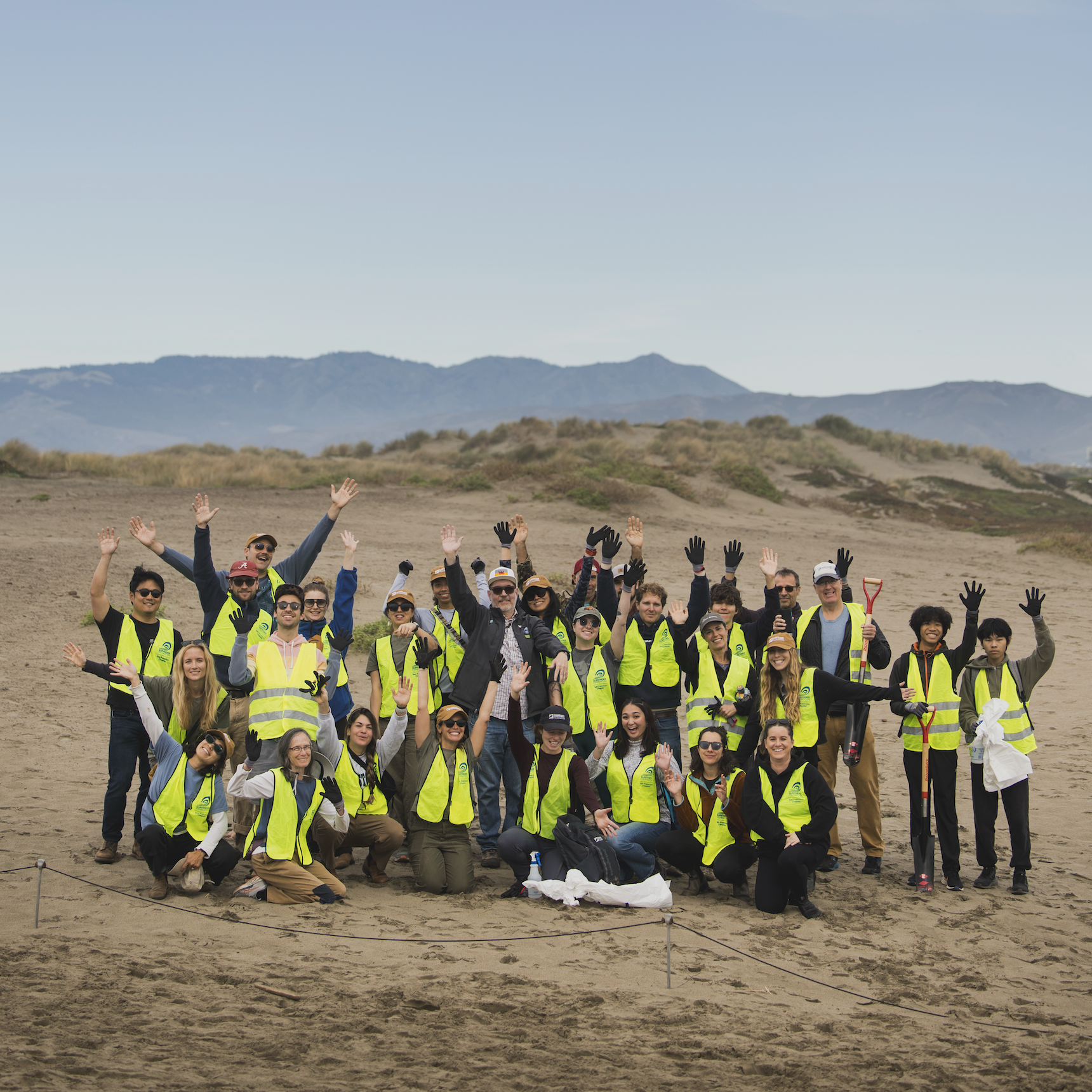
On the San Francisco coast, we're beginning the process to revegetate native dune habitats to strengthen our shoreline, support biodiversity, and bring people together to care for the places we love. Each restoration event is an opportunity to not only protect our coast, but also to educate, empower, and connect with the amazing people who care about it. Our work is about enhancing coastal resilience. By restoring the dunes, we’re strengthening the natural defenses that help safeguard our coast from storms, sea level rise, and erosion.
.jpg?width=2000&height=1333&name=_U_21953%20(1).jpg "_U_21953 (1)")
Why Healthy Dunes Matter
Healthy dunes play a vital role in protecting people, wildlife, and infrastructure. They
- Protect communities from storm surge and flooding
- Trap and stabilize sand using deep-rooted native plants like beach wild-rye leymus mollis.
- Create habitat for birds, pollinators, and other coastal wildlife
- Help maintain access to recreational beach areas
Coastal dunes are one of nature’s most powerful defenses against the impacts from climate change. As sea levels rise and storms become more intense, restoring these systems becomes more urgent and more valuable. Native plants like beach wildrye, beach-bur, yellow sand-verbana, and silvery leaf beach pea play a critical role. Their deep roots help anchor the dunes in place, while their foliage slows wind and water, helping dunes grow stronger over time.
The Challenges at Ocean Beach: Why We Need Your Help
Ocean Beach in San Francisco is a beautiful but changing coastline. We're seeing more and more sand washing away, strong winds blowing sand onto our roads, and sea level slowly rising. This isn't just nature at work; past human actions, like building roads and seawalls, have also changed how the beach naturally protects itself.
What's Happening to Our Dunes?
The dunes at Ocean Beach today aren't entirely natural. Many were built during the construction of the Great Highway and they're struggling because of several issues:
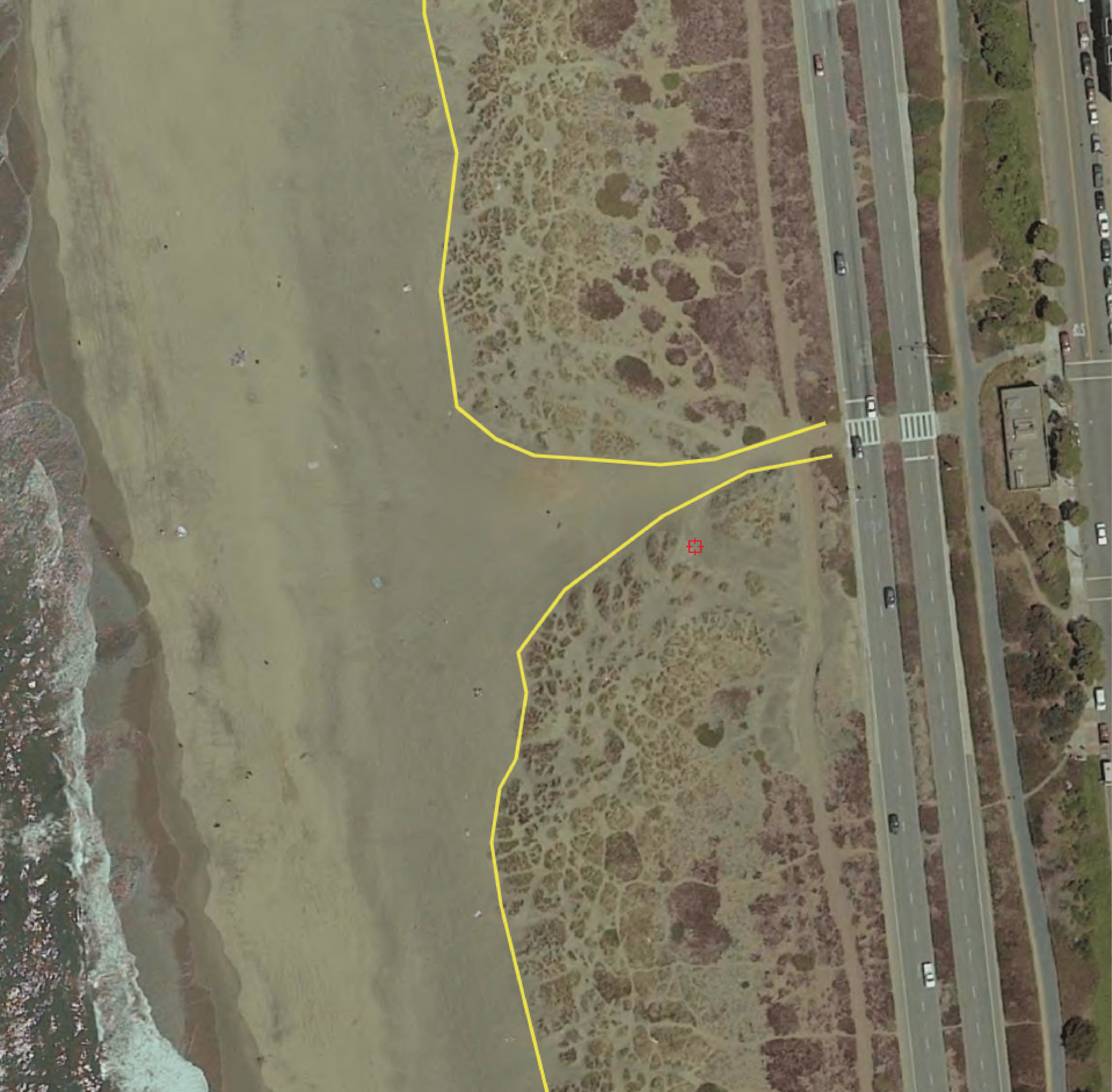
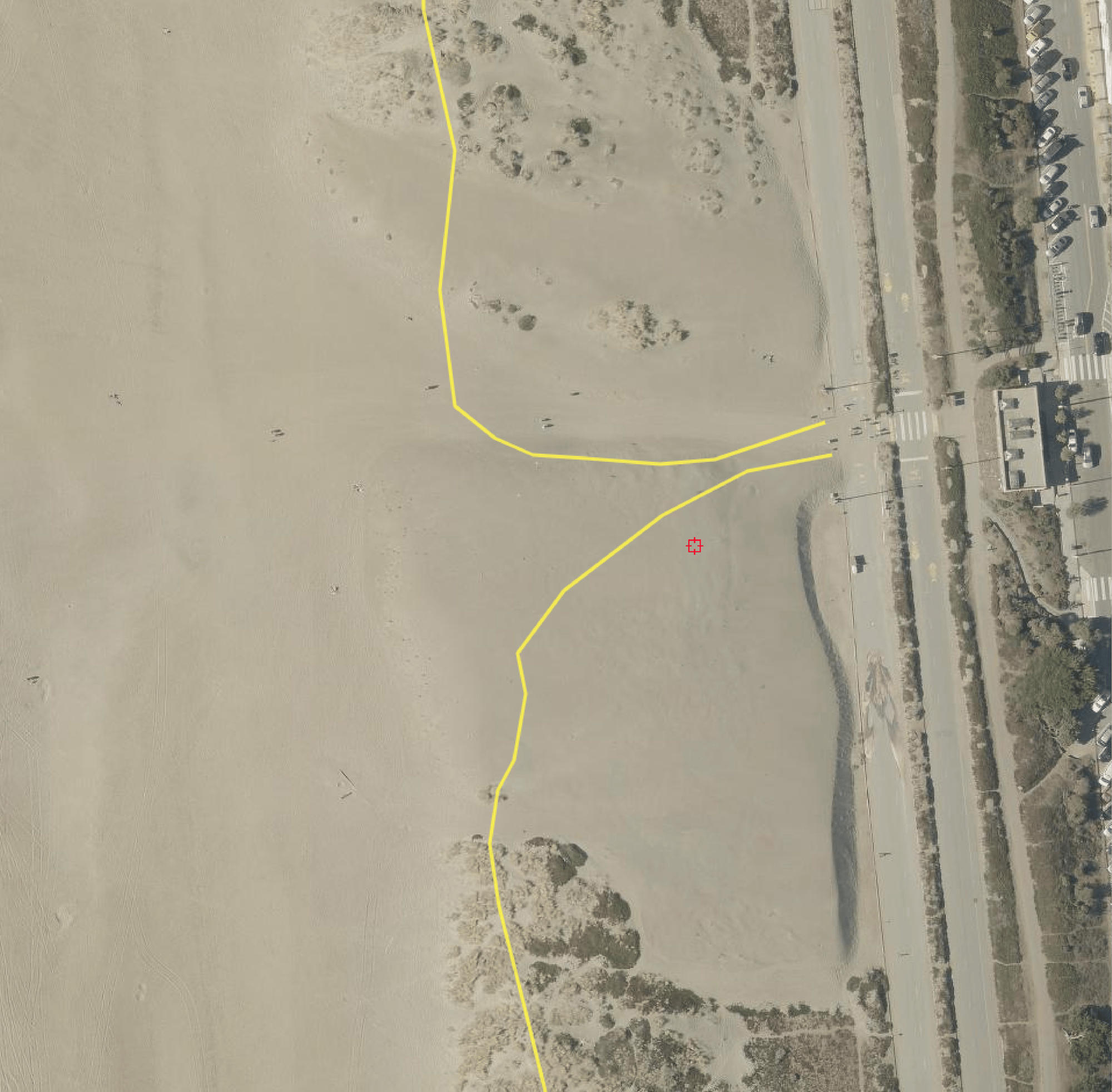
- Foot Traffic and Sand Blowouts: The biggest problem is people creating their own paths (social trails) through the dunes. Walking on these informal trails crushes the plants that hold the sand, leading to massive "blowouts" – large, bare, wind-carved holes in the dunes. These blowouts are especially bad at major street crossings like Lincoln Way, Judah Street, and Noriega Street, creating wide, open paths for sand to blow inland.
- The closure of the Great Highway to cars has increased foot traffic and more people walking on the dunes has made this problem worse. We want to see more people enjoying Ocean Beach while also protecting the beach for generations to come.
- Sand on Roads: When dunes are damaged or have blowouts, the wind carries sand directly onto the Great Highway and nearby walkways. This creates unsafe conditions and clogs storm drains
- Rising Sea Levels: Over time, rising ocean levels are expected to make the beach narrower and cause even more dune erosion, putting beach access and coastal structures at risk.
Nature-based Solutions and Community Engagement
Planting Native Dune Plants- Beach wildrye is a native grass that spreads quickly and is excellent at catching sand and building strong, broad dunes. It's much better than marram grass at resisting and recovering from blowouts.
- Other recommended native plants include yellow sand verbena, beach bur, Seaside amsinckia, coastal sagewort, San Francisco spineflower, mock heather, seaside glaucus, seaside buckwheat, beach saltbush, beach strawberry, Pacific wildrye, silvery beach pea, Douglas bluegrass, distant Phacelia, yellow bush lupine, and dune bush lupine. (Plane et al. 2023)
- Change where sand is dug up for the "backpass" operation, moving it closer to the water where the sand is coarser and less likely to blow away. This also frees up space for dunes to grow naturally.
- Sand cleared from roads should be put back on the foreshore (closer to the water) so waves can move it around naturally, instead of placing it where it prevents new dunes from forming.
- Leaving natural debris like wood and kelp (wrack) on the beach is important. It helps new "baby dunes" (embryo foredunes) start to grow by trapping sand and protecting young plants. We can also strategically place large logs to help this process. (Plane et al. 2023)
- Consolidate paths and create clear, marked paths for people to access the beach, especially at street intersections, to reduce walking all over the dunes.
- Using coarse sand on paths helps stop wind erosion
- Temporary fencing (like posts and cables) and brush mats (branches laid flat) will help keep people off newly planted areas while the plants grow.
- Signs to educate beach users about the project and encourage them to help protect the dunes.
- Getting the public involved through education and volunteer opportunities is essential to build a shared sense of responsibility for the dunes. (Plane et al. 2023)
Citations
Plane, E., Baye, P., Battalio, B., Lowe, J., Harris, K., & Burg, J. (2023). Growing Resilience: Recommendations for Dune Management at North Ocean Beach. SFEI Contribution No. 1155, San Francisco Estuary Institute, Richmond, CA.
Get Involved
Whether you want to dig in at an event, support with a donation, or just learn more, there’s a role for you in protecting and restoring San Francisco's coastline.
- Reach out with any questions
- Join our dune team!
- Volunteer at an upcoming restoration
- Donate to the project
SFEI Report
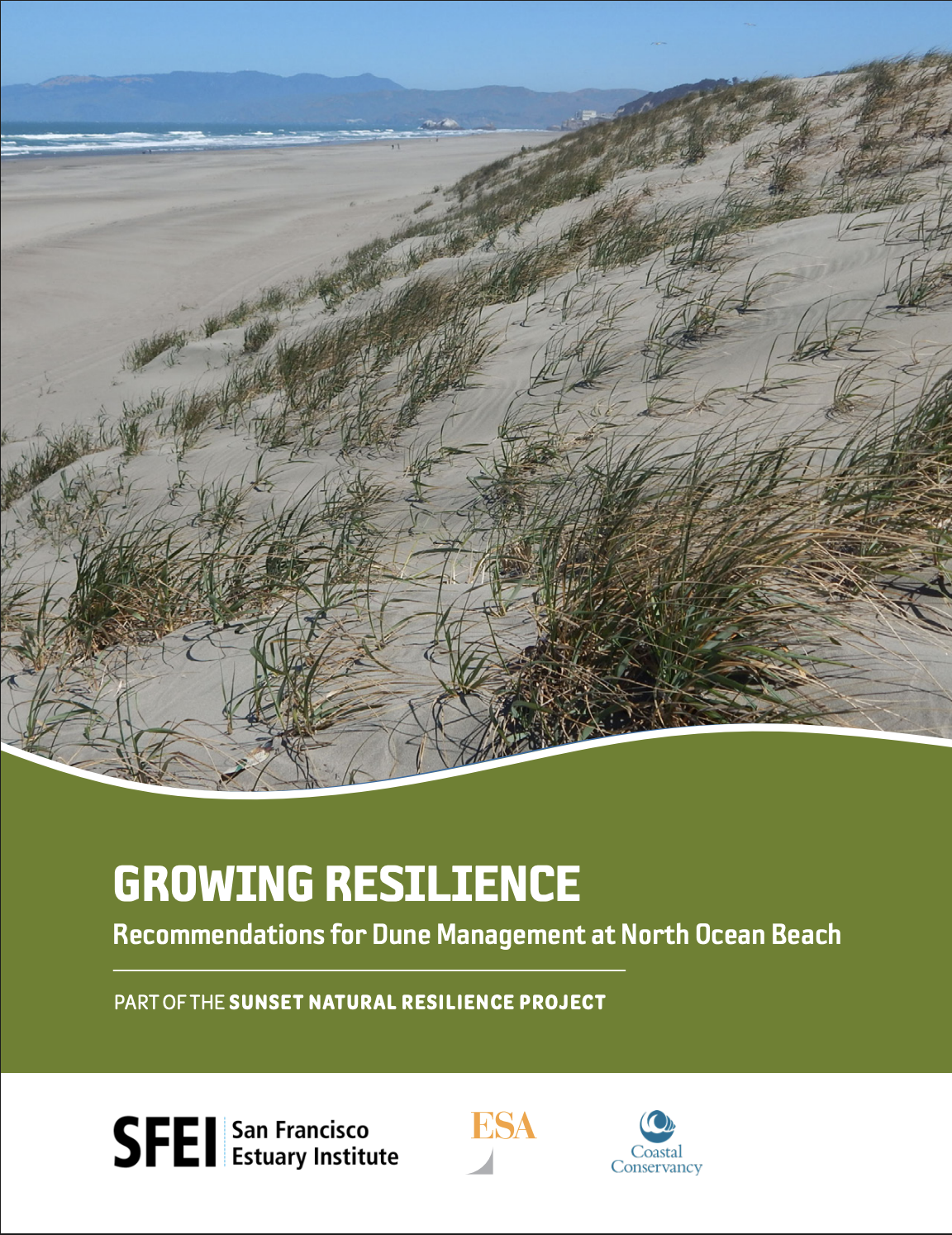
This project is guided by the report from San Francisco Estuary Institute and partners, ''Growing Resilience: Recommendations for Dune Management at North Ocean Beach'.